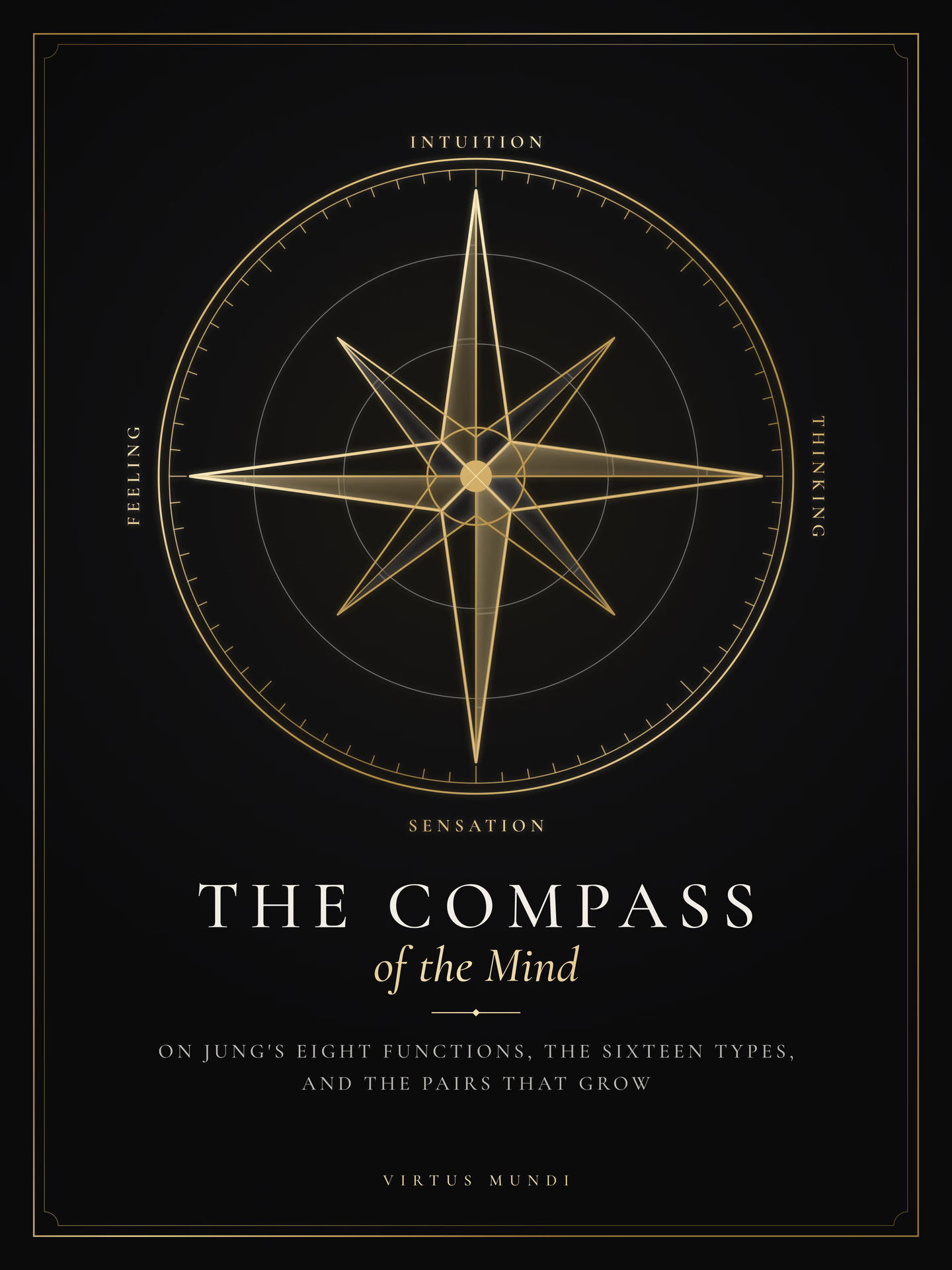
The Compass of the Mind
On Jung's eight functions, the sixteen types, and the pairs that grow
Introduction
Most people meet personality type as four letters at the end of an online quiz. The letters are shorthand, and they hide most of what matters. Behind each code sits a ranked set of four mental habits that Carl Jung called functions, two for taking the world in and two for deciding what to do about it.
Take ENTJ and ENTP. Three letters match, and not one function does. The ENTJ runs Te, Ni, Se, Fi; the ENTP runs Ne, Ti, Fe, Si. Both meet the world head on, but the ENTJ meets it with a decision and the ENTP with a question. A single letter, J or P, rearranges the whole mind.
This essay is about those functions: where the idea came from, what each one does when it is healthy and when it is not, how a type grows over a life, and what happens when two types share one. It leans on Jung himself, on Isabel Briggs Myers and the people who built on her, on John Beebe, on the research literature, and on a decade of careful writing at mbti-notes, a blog whose author has typed hundreds of people. Where the evidence is thin, it says so.
The map
Before the history, the thing most readers come for. Every type has three partners whose stacks are built to fit its own, and a large common ground of everyone else. Pick a type below to see them. The names are this essay’s own.
- A catalyst pair leads with the same function facing the other way, and each partner’s second function is the other’s third. Each shows the other the next step. It has the most room to grow.
- An echo pair holds the same four functions, every one turned around, so each lives in the other’s shadow. Much to grow on, and the most at stake.
- A complement pair has the stack in reverse. Each leads with what the other keeps last. The easiest of the three, and the one that asks least of either partner.
- Common ground is every other pairing. It is not a lower grade; most of what makes two people work lies outside type.
The panel under the spectrum explains any pair you choose. The upper bar shows how much the two stacks help each other, the lower one how much is at stake, and the list gives the reasons. Pick a partner in the spectrum or a cell in the grid to compare any two types.
Outward deciderslead with Te or Fe
Inward deciderslead with Ti or Fi
Inward perceiverslead with Ni or Si
Outward perceiverslead with Ne or Se
ENTJTe Ni Se Fi
with
How it tends to go
Pick a partner in the spectrum above or a cell in the grid below.
The sections on pairs at the end of the essay explain each tier and why the order holds.
Where the functions came from
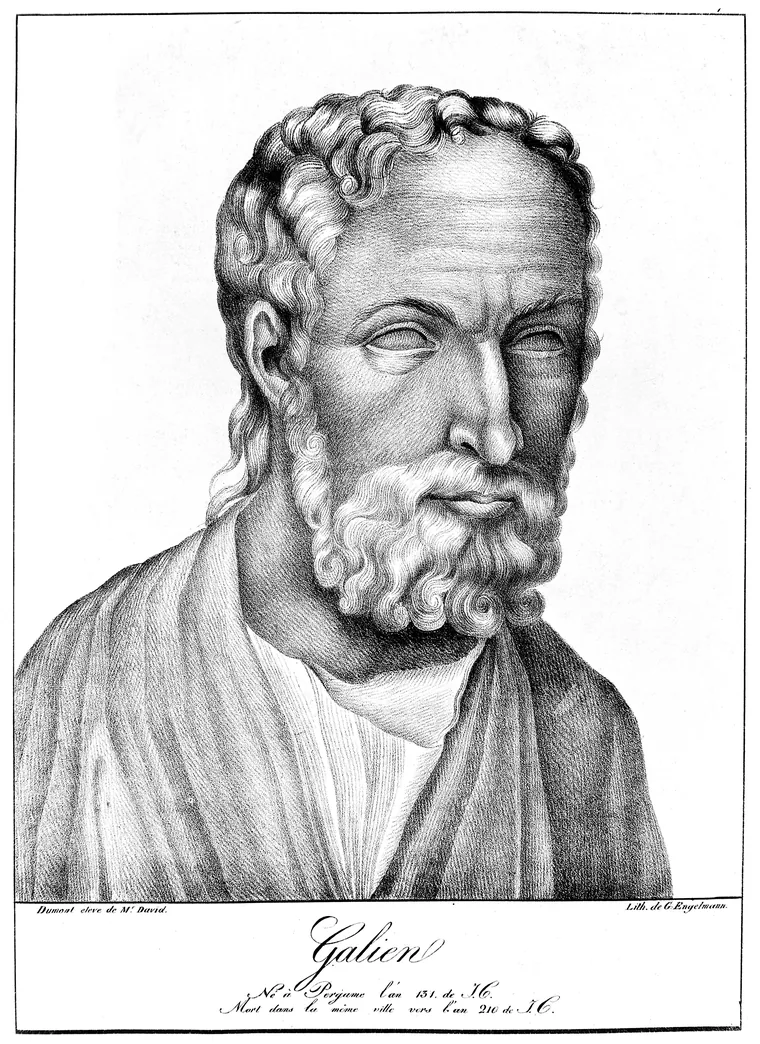
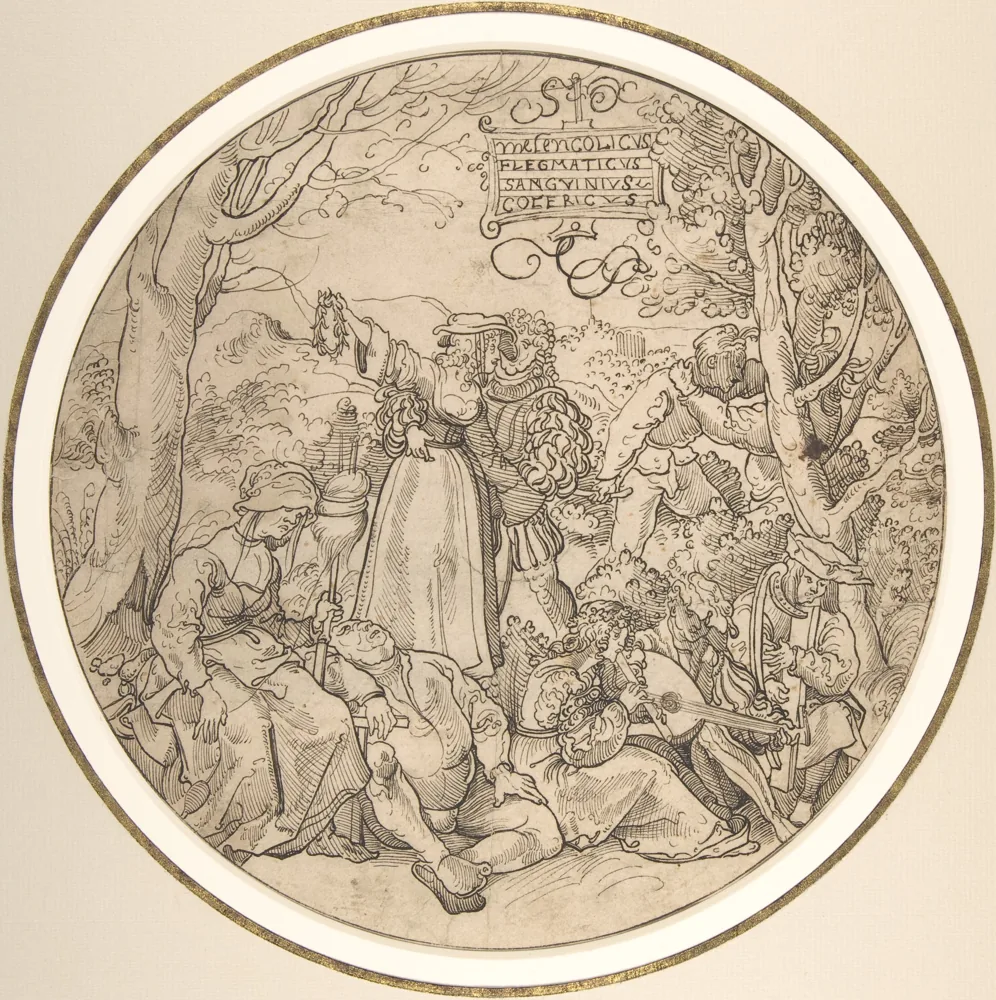
Sorting people into kinds is old. Medieval and Renaissance Europe read character through the four temperaments, melancholic, phlegmatic, sanguine and choleric, which went back through Galen to the Hippocratic idea of four bodily humours. Jung’s types were a break with that tradition and a descendant of it at once: still four, but built from what a mind attends to instead of what a body is made of.
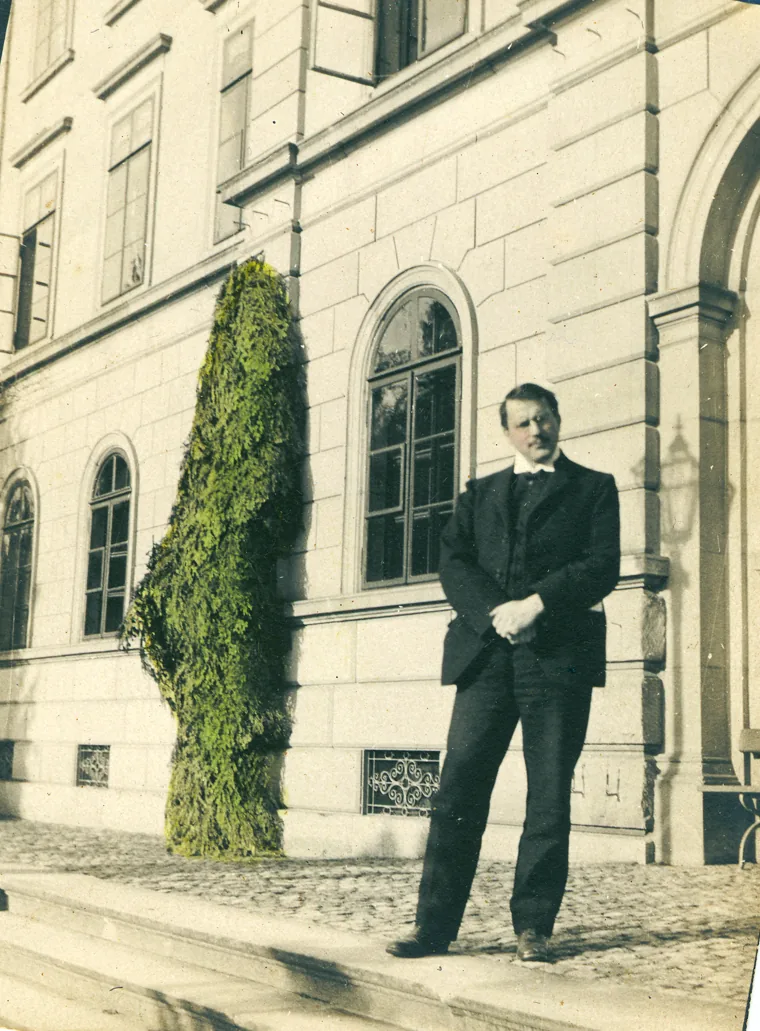
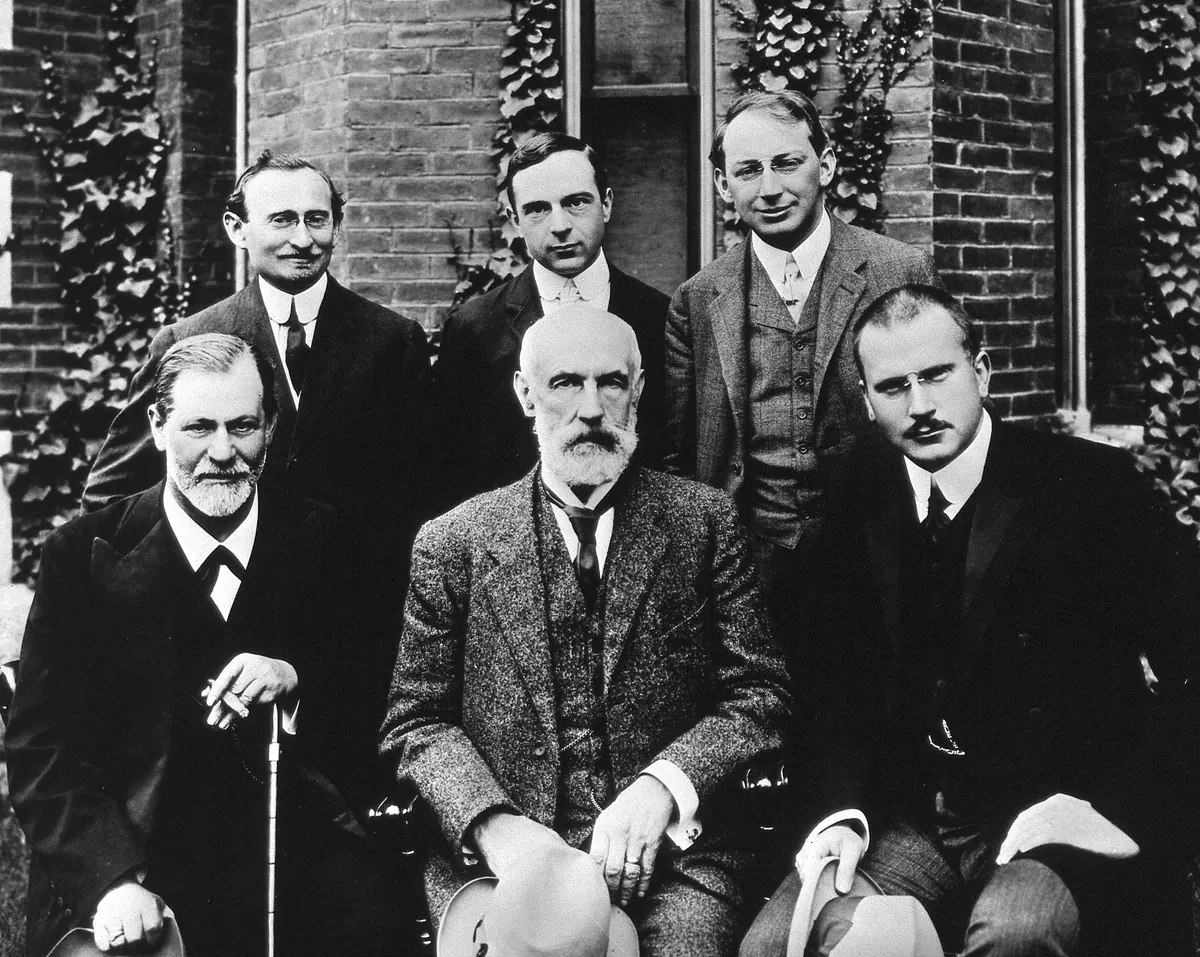
Jung published Psychologische Typen in Zürich in 1921, and H. Godwin Baynes’s English translation, Psychological Types, followed in 1923. He crossed two attitudes with four functions. The attitudes are introversion and extraversion: energy turned inward, toward the inner world, or outward, toward the outer one. Thinking and feeling weigh and decide, so he called them rational. Sensation and intuition take things in without judging them, and he called them irrational, meaning only that they work before reasoning starts. Two attitudes times four functions gave him eight types.
Nobody runs on one function alone, and Jung saw it. Beside the main function he placed a second, an auxiliary “in every respect different from the nature of the main function.” A thinker’s helper could be sensation or intuition, he wrote, but never feeling, its rival. He never quite said which way the auxiliary faces, though he described an introverted thinker’s other functions as primitive and extraverted.
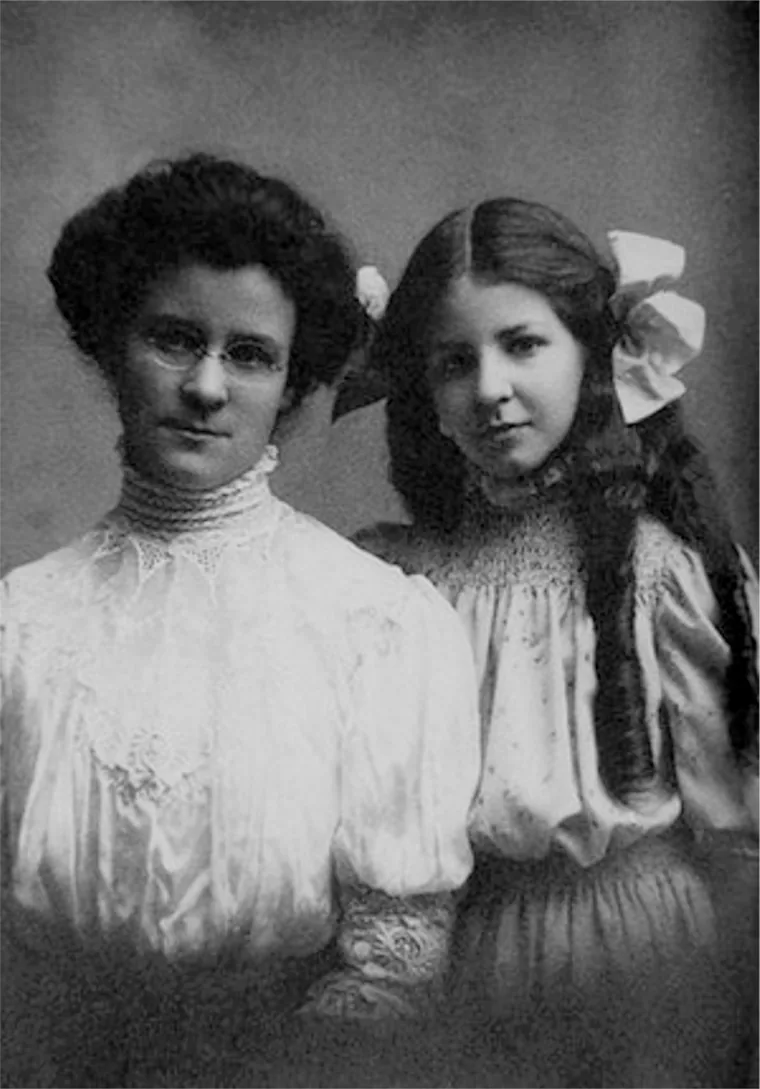
Katharine Cook Briggs, born in 1875, and her daughter Isabel Briggs Myers, born in 1897, turned those types into a questionnaire. Briggs wrote about type for The New Republic in 1926 and 1928. Myers began writing questions during the Second World War, and the first research version, Form A, appeared in 1943. She added a fourth pair of letters, judging and perceiving, to show which of a person’s two leading functions faces outward, and she settled the question Jung had left open: “the auxiliary provides needed extraversion for the introverts and needed introversion for the extraverts.”
Educational Testing Service published the first manual in 1962. Consulting Psychologists Press took the instrument over in 1975, the year Myers and Mary McCaulley opened the Center for Applications of Psychological Type in Gainesville, Florida. The publisher has been The Myers-Briggs Company since 2018.
The four-step ladder most type writing uses today came later still. In From Image to Likeness (1983), W. Harold Grant, Magdala Thompson and Thomas E. Clarke set a third function opposite the auxiliary, let the attitudes alternate all the way down, and tied each function to a stage of life. Even now the Myers & Briggs Foundation leaves the third function’s attitude for each reader to decide.
John Beebe gave the four positions faces, in a lecture series recorded by the C. G. Jung Institute of Chicago in 1988. Linda Berens later described the functions as “cognitive processes” in Dynamics of Personality Type (1999).
NoteBeebe's eight positions
Beebe matched each place in the stack to an archetype: a hero or heroine for the first function, a father or mother for the second, the puer or puella for the third, and the anima or animus for the fourth. Four more positions hold the same functions turned the other way: the opposing personality, the senex or witch, the trickster, and the demonic or daimonic. For the ENTJ those four shadow places hold Ti, Ne, Si and Fe, which happens to be the INTP’s whole stack.
Practitioners who type people for a living mostly keep to the plain four-step stack. Eight-position models are harder to apply consistently, and the four steps are enough to show where someone’s growth has stalled. This essay does the same.
Why not socionics
Socionics is the other system built on Jung’s eight types, and this essay sets its theory aside on purpose. Only its names for pairings come up, near the end. The economist Aušra Augustinavičiūtė put it together in Soviet Lithuania during the 1970s and set it out in her 1980 work On the Dual Nature of Man. Her raw material was Psychological Types, read through Antoni Kępiński’s theory of “information metabolism.” The eight functions were renamed as aspects of information. Strip out the new names and what is left of the functions is Jung’s.
What socionics added is the part that matters, and none of it has been independently shown to hold. It fixed every mind into the same eight-place model and declared sixteen relations between types, each with a verdict on how two people will get along. It types people by interview and observation instead of by questionnaire, so a type is only as good as the socionist who assigns it. Even the letters mislead. For introverts the last letter follows a different rule, so a socionics INTj is roughly an MBTI INTP.
Outside the former Soviet Union it is barely used, and inside it, its research comes mostly from its own institutes and journals. In 2017 the bulletin of the Russian Academy of Sciences’ commission against pseudoscience listed it in the same row as astrology, numerology and homeopathy. The Moscow psychometrician Alexander Shmelev had already complained in 2010 that it offers no clear experimental argument for its types and leans on literary likenesses instead, matching them to Don Quixote and Maxim Gorky. The newest couples study in its favour, published in 2025, looked at 95 couples typed in the author’s own consulting practice, so the person who assigned the types also judged whether they fit.
The eight functions
Each function is a way of making sense of the world. Sensing and intuition gather information, the first in concrete detail and the second in patterns and meanings. Thinking and feeling put that information in order so a decision can be made: thinking by impersonal logic, feeling by what matters to people. Each has an outward and an inward form, which makes eight.
They also differ in what they protect. The inward perceiving functions, Si and Ni, conserve energy and set priorities. Se and Ne keep a person open and quick to adapt. Ti and Fi guard independence of mind, while Te and Fe organise the world people share. None is better than another, and none comes with morality built in. A function can serve a good life or a bad one.
Sensing
Extraverted sensing (Se) lives in the present: what can be seen, touched and done right now. It reads a room on walking in and learns a sport by playing it. Introverted sensing (Si) keeps a detailed record of how things have been and notices when the present departs from it, like a cook who knows the bread is off before tasting it.
MaturitySe and Si, grown and ungrown
Grown-up Se treats the unexpected as a chance to learn and adapt. Ungrown Se only reacts: whatever happens next decides what it does, and it never asks whether that was the best move.
Grown-up Si prepares by learning carefully and adding each new detail to what it knows. Ungrown Si keeps the details that comfort it and quietly drops the ones that would force a change of course.
Each matures by letting its opposite in. Si needs some of Ne’s openness to the new, and Se needs a little of Ni’s sense of where things lead.
Intuition
Extraverted intuition (Ne) sees ten uses for one object and links between subjects that have never met. Introverted intuition (Ni) does the reverse: it narrows many impressions down to one picture of where things are heading, and it gives a person a sense of purpose and direction.
MaturityNe and Ni, grown and ungrown
Grown-up Ne is confident of progress because it can always see several workable paths. Ungrown Ne scatters: it cannot pick the promising idea out of the many.
Grown-up Ni carries a meaningful vision of what a person has to give. Ungrown Ni is sure it knows what the world is really like and finds only lack and emptiness in it.
Ne matures by respecting Si’s facts and track record. Ni matures by letting Se’s plain observation check its certainty.
Thinking
Extraverted thinking (Te) structures the world with measurements, rules and categories. It is the function of targets, and of spreadsheets that settle arguments. Introverted thinking (Ti) builds an inner model of how something works and tests every claim against it. A mechanic who will not trust the manual until the engine agrees with it is using Ti.
MaturityTe and Ti, grown and ungrown
Grown-up Te uses its strength on real problems and corrects its own mistakes. Ungrown Te uses power to bend the world to its wishes and does not notice when the results are bad for everyone else.
Grown-up Ti wants knowledge that is accurate, so it can act without bias or hypocrisy. Ungrown Ti follows private rules with no sense of how they fit the world around it.
Te matures by taking Fi’s values seriously, Ti by listening to what Fe knows about people.
Feeling
Extraverted feeling (Fe) gauges the emotional temperature of a group and adjusts to keep it in harmony, as a teacher does on sensing that a class has drifted. Introverted feeling (Fi) weighs every choice against an inner sense of what is right for this person, and it is behind the refusal that no argument can move.
MaturityFe and Fi, grown and ungrown
Grown-up Fe meets people as separate from itself and responds to their needs fairly and with compassion. Ungrown Fe cares about others only for how they make it feel.
Grown-up Fi turns its depth of feeling toward integrity and toward easing other people’s suffering. Ungrown Fi sees no further than its own hurt.
Fe matures by testing its loyalties against Ti’s logic, Fi by letting Te’s facts correct its sense of what is real.
The stack
A type is four of these functions in a fixed order. The first, the dominant, is the one a person trusts most and reaches for without thinking. The second, the auxiliary, balances it: if the first takes things in, the second decides, and if the first faces inward, the second faces out. The third and fourth, the tertiary and the inferior, work less consciously.
The ENTJ from the opening shows the pattern. Its stack runs extraverted thinking, introverted intuition, extraverted sensing and introverted feeling: Te, Ni, Se, Fi. The attitudes alternate all the way down, and the fourth function is the first one’s opposite in both kind and direction, feeling turned inward against thinking turned outward. The ISTP, which comes back in the pairs, runs Ti, Se, Ni, Fe.
How a stack grows
Grant, Thompson and Clarke’s timetable is still the usual rough guide. The dominant develops from about six to twelve, the auxiliary from twelve to twenty, the third function from twenty to thirty-five, and the inferior after thirty-five.
The order matters. A third function cannot grow well on top of a second that is still unhealthy. Its proper job is narrow: to check the excesses of the second function, and no more. The inferior is not meant to become a skill at all. It is most useful as an alarm, a sign that the whole system has tipped out of balance.
The grip and the loop
There are two familiar ways for a stack to go wrong. The first is the grip, a term from Naomi Quenk. When stress or exhaustion runs a person down, the inferior function surfaces and takes charge, and they act out of character, usually for a short spell. The stress that does it is the kind that feels beyond one’s power to cope.
The second is the loop, which is quieter and lasts longer. The first and third functions face the same way, so they can team up against the second and shut it out. The introvert turns further inward, the extravert further outward, and neither grows. It is a kind of self-deception that protects self-esteem, and it can run for months or years.
Put plainly, a loop is a person doubling down and a grip is a person gone missing. The way out of a loop runs through the second function, the one the loop avoids. The way out of a grip starts with rest and with the first function at its best. Nobody is exempt from either.
CaseThe ENTJ in the grip
An ENTJ runs on Te, on getting things done, and under enough strain that is the first thing to go. Confidence slips and tasks stop getting finished. Then the inferior Fi takes the wheel and drives badly. The usual commander turns passive and self-pitying, feels persecuted, nurses thoughts of revenge that feel entirely justified, and hides from the room it normally runs.
The way back is not more effort. The ENTJ needs distance from whatever is grinding it down, and then something it finds hard: an honest look at its own failures, and a question about what a fulfilling life would actually be, instead of accepting every challenge that comes along.
CaseThe ENTJ in the loop
The ENTJ’s loop runs through Se, its third function, and Te with Se makes a person who never stops moving. Everything feels urgent. Busywork stands in for progress, and impatience breeds mistakes.
From outside it looks like drive. What is missing is the pause in which Ni would ask whether any of it is going anywhere.
CaseThe ENTP, loop and grip
The ENTP leads with Ne, and its loop runs through Fe. Together they can talk their way around any mistake. In the loop the ENTP charms, deflects and compares itself favourably with others, and cannot admit that its own judgment caused the mess.
The grip is a different person altogether. Inferior Si takes over, and the most freewheeling of types turns pedantic and fussy about trivial details, and may fall ill under stress and fear illness out of all proportion. The ENTJ and the ENTP of the opening share three letters and fall apart in completely different ways.
CaseThe INFJ in the loop
For the INFJ the loop is Ni with Ti, and it is a way of not feeling. Uncomfortable emotions, usually the result of an underused Fe, get analysed instead of felt. Ti supplies tidy reasons that move responsibility elsewhere, and the person feels clear-sighted while in fact withdrawing from everyone around them.
The exit is the function the loop shuts out, the auxiliary Fe: turning back toward people and becoming a positive presence in their lives.
NoteAll sixteen, loop and grip
One line for each type, describing the typical loop through its third function and the typical grip of its fourth.
| Type | Loop | Grip |
|---|---|---|
| ENTJ | Se loop: hasty, error-prone, always busy | Fi grip: touchy about unfair treatment, vengeful |
| ESTJ | Ne loop: a positive face over feelings that call for change | Fi grip: passive, self-pitying, full of excuses |
| ENFJ | Se loop: status measured by appearances and comparisons | Ti grip: haunted by feelings of not belonging |
| ESFJ | Ne loop: risky distractions to cover unhappiness | Ti grip: ruminating, inventing logical excuses |
| ISTP | Ni loop: suspicious of being trapped or controlled | Fe grip: sudden guilt, shame and feelings of inadequacy |
| INTP | Si loop: risk-averse, closed to new ideas and advice | Fe grip: an unusual hunger for approval |
| ISFP | Ni loop: disengaged, unwilling to trust anything | Te grip: cold, angry, set on correcting everything |
| INFP | Si loop: replaying old mistakes, refusing new chances | Te grip: frantic, failed attempts to get life in order |
| INTJ | Fi loop: moral opinions treated as fact | Se grip: compulsive control of surroundings, sudden excess |
| ISTJ | Fi loop: knowing the right way and doing the wrong one | Ne grip: imagining everything that could go wrong |
| INFJ | Ti loop: self-aware in theory, evasive about feelings | Se grip: easily provoked, sensory overindulgence |
| ISFJ | Ti loop: overthinking, trusting only its own judgment | Ne grip: restless, edgy, expecting disaster |
| ENFP | Te loop: stubborn, unforgiving, refusing help | Si grip: drowning in an old regret |
| ESFP | Te loop: the easy path instead of the right one | Ni grip: gloomy, small, looking for omens |
| ENTP | Fe loop: condescending comparisons to feel superior | Si grip: pedantic about trivial details |
| ESTP | Fe loop: charm and jokes to dodge criticism | Ni grip: panic about a doomed future |
Maturity
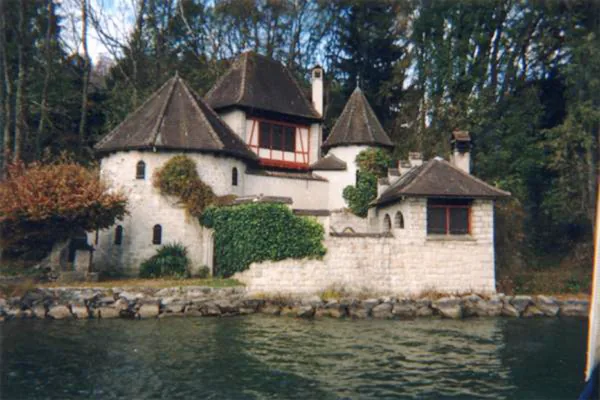
Where a function sits in the stack says how much a person leans on it, not how well they use it. A first function can be immature for decades. There is also a difference between a function being healthy, which only means it is used for its proper job, and mature, which is a far higher bar.
Maturity, in this picture, is a truce between opposites. Si learns from Ne and Ne from Si, and the same goes for Ni and Se, Ti and Fe, Fi and Te. An ENTJ grows up when Te starts to take Fi seriously. An ENTP grows up when Ne will listen to Si.
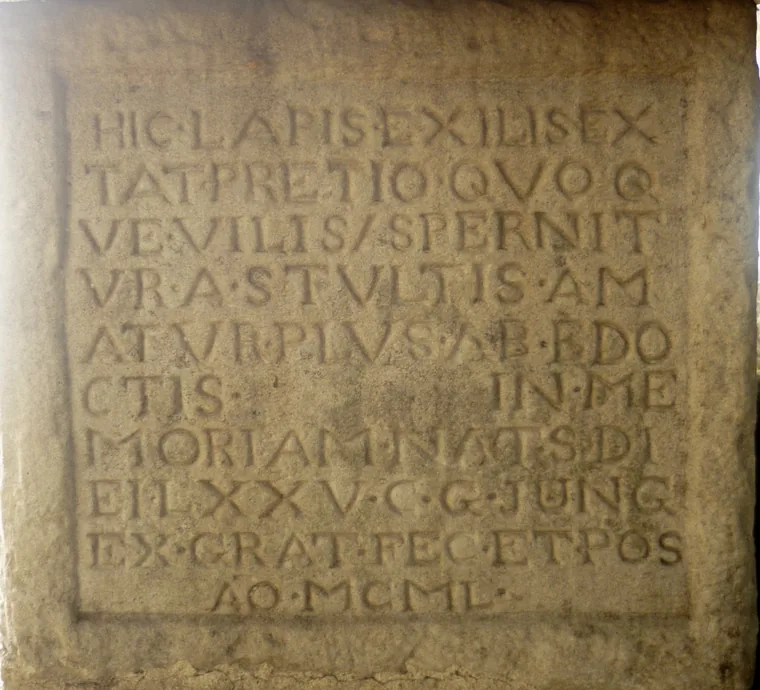
It also runs on a longer clock than type. Writers who use type for development often lean on Jane Loevinger’s stages of ego development, which run from a self-protective outlook to one of integration. Most adults settle in the middle stages, each stage takes years to settle, and the last stages are rarely reached before middle age, if at all.
Trauma can stop that clock. Harm in childhood can leave a person stuck in a long grip or a loop that lasts for years, and it confuses typing, because someone in a chronic grip can look like their own opposite. None of it is a life sentence, and none of it is the person’s fault.
Two warnings belong here. Building on the wrong stack can do harm, so getting one’s type right comes first. And type development is no cure for mental illness, which needs treatment of its own.
What the research shows
The case for type begins with the four scales the MBTI measures, and here the evidence is strong. In 1989 Robert McCrae and Paul Costa gave the MBTI and their own five-factor inventory to 267 men and 201 women. The MBTI’s extraversion scale matched five-factor extraversion with correlations of .74 for the men and .69 for the women, and its intuition scale matched openness to experience at .72 and .69. Corrected for unreliability, they wrote, these pairs “would approach unity.” Feeling went with agreeableness (.44 and .46) and judging with conscientiousness (.49 and .46). Whatever else is true of type, the letters point at real differences between people.
The scales are consistent, too. In 2002 Robert and Mary Margaret Capraro pooled seventy reliability estimates from published studies and found an average of .815. Thinking and feeling was the weakest pair, at .764. The publisher’s own figures for the current version, Form M, run higher.
The eight functions can also be measured one by one. The Singer-Loomis Type Deployment Inventory scores each attitude and function on its own scale instead of forcing a choice between opposites. Randolph Arnau, Bruce Thompson and David Rosen found in 1999 that it gave “reasonably reliable and valid scores.” A Korean version, tested on 521 people and published in 2024, reached an overall reliability of .94.
Measured this way, the opposites of type theory stop behaving like opposites. Girelli and Stake reported in 1993 that once people rated each function separately, thinking and feeling were not bipolar, and neither were sensing and intuition. A person can score high on both.
Dario Nardi’s Cognitive Processes Assessment, one of the two tests recommended below, also rates each of the eight on its own. Nardi reports that Mina Barimany analysed 129,350 of its results and found that a person’s second-highest process was usually of the other kind from the first, a judging process behind a perceiving one or the reverse, as Jung’s auxiliary predicts. The fourth-highest was the dominant in the other attitude in a third of cases, which the alternating stack does not predict. The figures come from Nardi’s own site, not a journal.
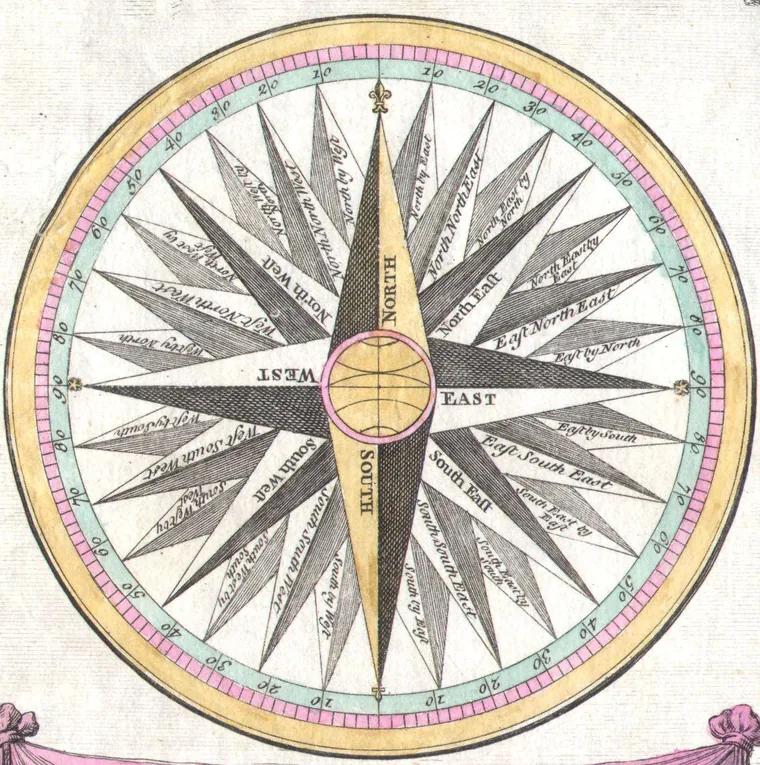
Large samples show the same thing from another side. Scores on each MBTI scale bunch in the middle instead of splitting into two camps: working with about 12,000 people, Bess and Harvey found the distributions “strongly center-weighted.” Jung would not have been surprised. He wrote that a typology is not meant “to classify human beings into categories,” and compared his types to the points of a compass, “just as arbitrary and just as indispensable.”
Then come the problems.
The first is stability. In the publisher’s 1998 manual, 65 percent of people kept all four letters when retested four weeks later, so 35 percent came back as a different type. The publisher now says “about 50 percent” keep the same whole type, with 90 percent matching on at least three letters. Scores near the middle of a scale flip easily, and most scores are near the middle.
The second is the stack itself. If the dominant leads and the inferior trails, the four functions should show up in that order of strength. James Reynierse checked the prediction against data he had gathered with Harker and found the expected order “only once out of 540 tests.” His paper, “The Case Against Type Dynamics,” appeared in 2009 in the journal of the type community’s own research centre, and concluded that type dynamics “fails most efficacy tests.” McCrae and Costa had come to a similar view twenty years earlier: “INTJs differ from ENTJs only in the ways that introverts differ from extraverts.”
The third is the brain. Dario Nardi’s Neuroscience of Personality (2011) reported a pilot EEG study of 65 young adults across all sixteen types, about four for each type. Nardi himself has said that “correlation doesn’t equal causation.”
The critics go further. Randy Stein and Alexander Swan concluded in 2019 that MBTI theory “lacks agreement with known facts and data, lacks testability, and possesses internal contradictions.” Part of type’s appeal is the Barnum effect, the readiness to accept vague descriptions as personal. In Forer’s classroom test, 39 students rated one identical sketch at 4.3 out of 5 for accuracy.
Serious writers on type accept much of this. Their defence is that the test and the theory are different things: a quiz can sort people badly while the functions remain a good way to watch one’s own mind.
So the record divides cleanly. The scales are real, and the eight functions can be measured as separate capacities. The neat ordering of the stack is unproven. That is the weight to give the rest of this essay.
Different maps, the same ground
The strongest case that type is objective, a description of real differences and not a story people tell about themselves, is that it keeps being found from different starting points.
The four temperaments came out of a theory of bodily fluids, two thousand years before Jung. Jung reached his types from clinical work. The Big Five came from somewhere else again: the dictionary. In 1936 Gordon Allport and Henry Odbert went through about 400,000 English words and pulled out 17,953 that describe people, and when Ernest Tupes and Raymond Christal analysed trait ratings from eight samples, they found “five fairly strong and recurrent factors.” Paul Costa and Robert McCrae, who built the best-known Big Five test, took their extraversion from Hans Eysenck, not from Jung. Yet when they gave both tests to the same people, the MBTI’s extraversion matched theirs at .74 and its intuition matched openness at .72.
Socionics is a second check. It grew in Vilnius in the 1970s, cut off from Western psychology, and Wikisocion, its community’s own reference, says Augustinavičiūtė learned of the MBTI only in the mid-1980s. Reading Jung apart from Isabel Myers, she still arrived at sixteen types, and the three pairings this essay maps are among her relations. Across cultures the broad dimensions recur as well. When McCrae and Antonio Terracciano had students in 50 cultures rate people they knew, the familiar structure “was clearly replicated in most cultures and was recognizable in all.”
Separate instruments, built on different theories in different countries, keep landing on the same few dimensions, the way surveyors working apart draw the same coastline. That is the best evidence there is that the categories are found and not invented: people differ along these lines whatever system is used to name them.
Two limits keep the claim honest. Studies built from scratch in other languages agree less neatly. Gerard Saucier and Lewis Goldberg found the five factors “reproduced better in some languages than in others,” and Michael Ashton and colleagues found six factors in seven languages. And the dimensions are continuous. Bess and Harvey’s “strongly center-weighted” scores mean the ground is real while the lines drawn across it are conventions, much as lines of longitude are. Jung said as much with his compass: the points are arbitrary, and indispensable.
Finding your type
The stability figures above carry a practical lesson: one sitting of one test is a weak way to find a type. A third of the people in the 1998 manual came back as a different type four weeks later, and the changes cluster in whichever preference sat closest to the middle. When the publisher asked 8,836 people who had taken the test online whether its answer fitted them, 72.9 percent kept all four letters after reading about type. The rest changed at least one.
So take the test more than once, and spread the sittings out. Three or four times over several months, in ordinary weeks and not in a crisis, gives a far truer picture than one result. Keep every score. Letters that hold steady can be trusted. A letter that flips is the one to study. The Myers & Briggs Foundation builds the same idea into its own process. It treats a result as the start of finding a best-fit type, says “It is OK not to decide during your first session,” and suggests keeping a journal and getting “feedback from others.” No study has tested whether several sittings beat one, so take this as good practice, not proof.
A test is only the beginning. At best it narrows the field to a few candidate types. What decides is a person’s most consistent patterns over the long run, and evidence for all four positions in a stack, the lower ones as much as the first. Someone who fits a dominant function but shows no sign of that type’s auxiliary or inferior has not found their type yet.
Michael Caloz, a coach who has studied type for over a decade, says the same from practice. It “still typically takes me well over an hour to confidently type someone,” he writes, and he likes several sessions to be sure. His own type took him “several years” to settle. For years he took himself for an introvert “because I was depressed and socially anxious.” He lists what throws people off: culture, learned habits, the self they would like to be, youth, mental health and trauma. Trauma can even pass for a function. Hypervigilance can look like Se, he writes, and dissociation like Ti or Ni.
The two best free tests are both built on the eight functions. Keys2Cognition is Dario Nardi’s Cognitive Processes Assessment. Its 48 statements are each rated on their own, from “Not me” to “Exactly me,” instead of being played off against an opposite, and the result is a profile of all eight processes. Nardi has kept it free since 2007. Michael Caloz’s test takes fifteen to twenty minutes and returns “a list of roughly ranked potential results” with notes on each, then leaves the choice to the reader: “You are the only one who truly knows how your mind works.” One scores each function and the other weighs whole types, so they check each other well.
Before any test, two questions give a first guess.
Step 1 of 2. Which of these do you trust first, the one you reach for without being asked?
NoteA routine for the next six months
- Take the two tests above now, then again every six to eight weeks, four times in all. Keep each result.
- Between sittings, read about the functions themselves. The sixteen type portraits are easier to flatter yourself with.
- For each type still in the running, look for all four functions in their places, the inferior included. Your worst weeks show it best.
- Ask two people who know you well what you are like at your best and at your lowest.
- Watch for a type you want to be. If you have to stretch to make a dominant function fit, it is probably not yours.
- If life was hard when you sat a test, give that result less weight.
Why type is worth having
People already use type language on a huge scale. The Myers-Briggs Company says “as many as 1.5 million assessments are administered annually,” in 115 countries and 29 languages, though those are its own figures. 16Personalities, a different test that “does not assign Jungian cognitive function stacks,” reports more than 1.58 billion completed tests. Type talk will happen either way, so it matters how it is used.
Used well, it gives a person two things. One is self-knowledge: a vocabulary for noticing one’s own habits of mind, including the convenient stories one tells about them. The other is a vocabulary for difference. Half the trouble between people is not understanding where the other person is coming from.
There is some evidence that this helps groups. In a 2003 study, Tricia Varvel and Stephanie Adams gave type training to three classes of engineering seniors and compared their design teams with untrained ones. The trained teams scored higher on performance, communication, interdependence and psychological safety. The design was weak, with training assigned by class and no placebo course, but the result points the way type’s defenders expect.
A second study shows the limit. When Richard Bannerot looked at forty student design teams in 2006, the teams that happened to meet the diversity rules of type-based team building did worst. Type helps people understand a team. It is no recipe for building one.
What would it look like to use type data well, at scale?
Schools could teach the vocabulary without sorting anyone. Matching lessons to “learning styles” has “virtually no evidence” behind it, as Harold Pashler and his colleagues found in 2008. Teaching students that minds take in and weigh information differently is a separate thing, and it costs little.
Workplaces could use type for team training and for working through conflict, and never for hiring. The publisher itself says the MBTI is “not intended for use in selection of job candidates.” A 1991 National Research Council review found “not sufficient, well-designed research to justify the use of the MBTI in career counseling programs.”
Counsellors and couples could use it as a shared language, under the rule in the MBTI’s own code of ethics that no one should be steered “to, or away from, a particular career, personal relationship or activity based solely upon type.”
And researchers could at last test the theory. If even a small share of the assessments given each year also scored the eight functions separately, as the Singer-Loomis inventory and Nardi’s assessment do, and followed people over time, the open questions in this essay would get answers, from the order of the stack to the pairings below.
How types come across
The functions describe what goes on inside a person. Linda Berens, whose 1999 book on the eight functions is among this essay’s sources, added a way of describing what other people see first. She calls it interaction styles. It grew in the 1990s out of two distinctions she had worked with alongside David Keirsey, and she places it in the same family as DiSC, which goes back to William Moulton Marston’s 1928 book Emotions of Normal People.
The first distinction is how a person talks when something needs doing. Some direct: they give structure and say what should happen and by when. Others inform: they offer what they know, ask for input and leave the decision open. The second is who moves first. Initiators reach out and get things started. Responders wait, take things in, and act once they have. Crossed, the two give four styles, each with a theme in Berens’s words.
The styles cut across the stacks. ENTJ and ESTP share a style and lead with different functions. No pair in the next section shares one, because a catalyst, complement or echo partner always flips E and I, and with it initiating and responding.
Berens offered the styles as a way to read friction in a conversation while it is happening. A Get-Things-Going type thinking out loud can sound undecided to an In-Charge type, and the In-Charge type’s quick instructions can feel to the other like a door closing. No independent study of the model turned up in the research for this essay. It is most useful in the moment, as a name for what is going wrong.
Pairs and growth
Type does not decide whether two people belong together. What decides it, far more often, is emotional maturity and the ability to talk honestly. Any two types can do well when both are supportive and alert to each other’s priorities and sore spots. Too much comfort can stall a pair as surely as too much friction.
What counts for more than type is what each person carries in from the past. Attachment style, learned in the first relationships with caregivers, teachers and friends, shapes how a person handles closeness, and it is a separate thing from type. It can also be relearned. For someone insecurely attached, the partner’s type hardly matters until that changes.
The research puts numbers on this. A 2012 meta-analysis by Li and Chan pooled 73 studies and 21,602 people and found both anxious and avoidant attachment bad for every side of relationship quality it measured, with avoidance doing more harm to satisfaction and closeness and anxiety more to conflict. In 2020 Samantha Joel and colleagues from 29 laboratories ran machine learning across 43 long-running couples studies. Among the traits a person brings, the strongest predictors of how well a relationship went were life satisfaction, low mood, depression and the two attachment insecurities. Childhood harm reaches forward as well. Colman and Widom followed 1,196 people, 676 of them from court-substantiated cases of abuse and neglect between 1967 and 1971, and found more cohabiting, more walking out and more divorce among those who had been abused or neglected.
Research on couples and type agrees. Jung believed opposites marry. “Either type has a predilection to marry its opposite, each being unconsciously complementary to the other,” he wrote, and such a match works while life keeps the couple busy, then turns into a struggle “envenomed, brutal, full of mutual depreciation” once they have time to face each other. Isabel Myers tested the first half. Among 375 couples typed in the 1940s she found more similarity than chance would give on every preference, and couples who were mostly alike outnumbered those mostly opposite two to one. Her explanation for Jung’s impression was his sample: analysts see the marriages in trouble. Later studies point the same way, only more weakly. Hilmar Nordvik found in 1996 that the MBTI scores of 90 couples correlated “close to zero” between partners, and a study of 426 couples by Marioles, Strickert and Hammer found, in the MBTI Manual’s summary, “little evidence that opposites attract or marry.”
Satisfaction is where type falls away. Myers never measured it: her couples counted as successful because they were not in counselling, and she concluded that “similarity of type is not important, except as it leads to” understanding, appreciation and respect. Marioles and his colleagues found “no type-related pattern to satisfaction ratings.” Among 62 couples at a Korean clinic, type similarity made no difference to marital satisfaction (Kong, 2010). In three large national samples of married couples, from Australia, the United Kingdom and Germany, Dyrenforth and colleagues found that how alike partners’ personalities were explained “less than .5%” of their satisfaction, against about six percent for each person’s own traits. The 1985 MBTI Manual put it in one line: “Happy and unhappy marriages are found in all type combinations.”
So the floor is high. Any two types can do well, and maturity counts for more than structure. Some pairs still work better than others, and here the functions have something to add.
What they add is mostly clinical. The 1998 MBTI Manual describes “an INFP-ENTJ couple” who “embody each other’s inferior functions”: under ordinary stress the INFP sees a critic in the ENTJ, and the ENTJ feels hurt and rejected, each projecting the function they keep last onto the other. Jung said much the same of a man who chooses the woman best able to carry his projection: he may find he “has manifestly married his own worst weakness.” The pairs below describe where that kind of projection is likeliest to land. None of it has been tested as a prediction, and the Manual itself says there are no studies of how well type works in couples therapy.
The catalyst pair
Some pairs are built so that each partner is strong exactly where the other is still learning. The rule is short. Two types make a catalyst pair when they lead with the same function facing opposite ways, and each one’s second function is the other’s third.
Take the ENTJ and the ISTP. Both lead with thinking, the ENTJ outward (Te) and the ISTP inward (Ti). The ISTP’s second function, extraverted sensing, is the ENTJ’s third. The ENTJ’s second, introverted intuition, is the ISTP’s third.
Why would that help? Go back to the timetable. Between about twenty and thirty-five the third function is the one under construction, and its job is to rein in the second. An ENTJ’s Ni can harden into a single vision followed past the point of sense. The remedy is Se, plain attention to what is actually there. The ISTP lives in Se and shows, every day, what it looks like used well. It works the other way too. The ISTP’s Se can scatter into one experience after another, and the ENTJ’s steady Ni gives it somewhere to go. Each partner models the other’s next step without trying.
The heroes help in a different way. Te and Ti are one function facing two directions. Both partners judge by logic, one by measurable results and the other by an inner model of how things work. They want the same thing from an argument, which is to get it right, and they look for it in different places. Even their weak points sit well together. The ENTJ’s inferior is introverted feeling and the ISTP’s is extraverted feeling, so neither partner’s strongest function lands on the other’s sorest spot.
Day to day, most of the friction is about pace. The ENTJ wants a decision and the ISTP wants to keep its options open, so each can read the other as rigid or lazy. Feelings are the other weak spot: neither likes talking about them, and under strain the ENTJ judges harshly while the ISTP withdraws. The ISTP’s eye for concrete detail is also what the ENTJ most often lacks, and it can strip back a plan the ENTJ has made too elaborate.
The same build cuts the other way. A third function is a temptation as well as a task, and a partner who is strong in it can feed the indulgence instead of modelling the cure. An ENTJ who is avoiding reflection can follow the ISTP from one action to the next and call it living in the moment. That is the loop from earlier, Te and Se teaming up to shut out Ni. An ISTP can take the ENTJ’s long-range certainty as licence to withdraw into theory, Ti and Ni with no Se to check them. And two people who both need to be right, by different standards, can turn every disagreement into a contest over whose logic counts. The catalyst pair gives two maturing people more than any other pairing, and gives two stalled ones plenty to fight over.
Every type has exactly one catalyst: ENTJ and ISTP, ESTJ and INTP, ENFJ and ISFP, ESFJ and INFP, INTJ and ENFP, INFJ and ENTP, ISTJ and ESFP, ISFJ and ESTP. As a letter rule, flip E and I, flip J and P, flip the letter of the second function, and keep the letter of the first.
Of the four kinds of pair, the catalyst is usually the one most focused on growth. Each partner keeps meeting their own next step in the other, and the friction tends to come from that same push. The claim rests on the development model above, and no study has tested it yet. Growing in Pairs sets out what a fair test would look like.
The echo pair
Each type has two more partners with a structural link. Like the catalyst, both flip E and I and flip J and P, so in all three one partner’s first function faces outward and the other’s faces inward.
The echo pair uses your four functions with every attitude reversed. For the ENTJ it is the INTP, whose Ti, Ne, Si, Fe mirrors Te, Ni, Se, Fi. In Beebe’s terms the INTP’s whole stack is the ENTJ’s shadow, the four places where the ENTJ’s own functions sit turned the other way, and the ENTJ’s stack is the INTP’s.
That makes it the pairing with the most at stake. Each partner does what the other does, the other way round: the ENTJ judges by results, the INTP by an inner model, and each can find the other’s version plainly wrong. Beebe’s names for the shadow places, the opposing personality, the senex or witch, the trickster and the demon, describe how people behave when they are pushed into them, and an echo partner can press on all four at once.
Day to day it shows up as tempo and focus. The ENTJ wants to act on a problem now and settle on the one best answer. The INTP wants time alone with it and keeps many answers open. Each can come to see the other as the problem, the INTP as slow and scattered, the ENTJ as hasty and stubborn, when both are using the same function the other way round.
It is also a pairing with a great deal to grow on, second only to the catalyst. The heroes match, as in the catalyst pair, so the two want the same thing from an argument. Living beside your own functions turned around is a standing invitation to own the side of yourself you would rather not use. What the echo pair lacks is the exchange: neither partner’s second function is the other’s third, so neither models the other’s next step the way a catalyst does.
The complement pair
The complement pair shares none of your letters, and its stack is yours in reverse. For the ENTJ it is the ISFP, whose Fi, Se, Ni, Te is Te, Ni, Se, Fi read backwards. The exchange is here too: the ISFP’s second function is the ENTJ’s third, and the ENTJ’s second is the ISFP’s third. And every function faces the same way in both stacks, so nothing either partner does sits in the other’s shadow.
That makes it the easiest of the three linked pairs, and the one with the least at stake. Each partner is at home exactly where the other is weakest: the ISFP leads with the Fi the ENTJ keeps last, and the ENTJ with the Te the ISFP keeps last. The two fit like halves, and opposites often fall for each other for this reason.
Its friction is real but easy to read, because it sits at the two ends of the stack. The ISFP can find the ENTJ cold about feelings and pushy with its plans; the ENTJ can find the ISFP oversensitive and hard to organise. Each is describing the other’s strongest function from the outside, and seeing that can turn a complaint into a request for help.
The fit is also why it offers the least growth of the three. When each partner can carry the other’s weakest function, neither has to grow their own, and the pair settles into a division of labour. It can run happily that way for years. It grows only when both partners use the other as a model for their own lower functions instead of a substitute for them.
Common ground
The other twelve types make up common ground. It is not a lower grade. A pair here has no built-in structural help and no built-in collision, and the couples research says structure explains little of how a relationship goes, while maturity and communication explain more. Two people of the same type belong here too, with a deep and quick understanding and a shared risk of running to extremes together.
One map, many names
Other traditions have drawn the same three pairings and named them differently, which is half the reason talk about compatibility gets confusing.
Socionics names fourteen relations between types. Matched by their first two functions, this essay’s three pairs each land on exactly one of them, for all eight pairs in each tier. The catalyst pair is socionics’ mirage, or illusionary, relation. The echo pair is extinguishment, also called contrary. The complement pair is duality, the relation Augustinavičiūtė built her system around. The match has to go by functions and not by letters, because socionics spells J and P differently for introverts: this essay’s ISTP, Ti then Se, is an ISTj there.
| This essay | Socionics | Names seen elsewhere |
|---|---|---|
| Catalyst (ENTJ and ISTP) | Mirage, or illusionary | “golden pair” or “natural partner” on some sites |
| Echo (ENTJ and INTP) | Extinguishment, or contrary | the “shadow” pair, after Beebe; another “natural partner” |
| Complement (ENTJ and ISFP) | Duality | “opposite” or “true opposite”; “shadow type” on PersonalityPage; “reverse compatible” at mbti-notes |
| The same type | Identity |
Online the words drift. Truity reports the INTP and INFJ “touted” as the golden pair, a match none of these rules produce. In a 2017 forum thread on the golden pair, the INTJ and ENFP, a catalyst pair, come up as a “natural partnership”, and one compatibility chart hands “golden” to the ENTJ and ISFP, a complement. “Shadow” means the complement on PersonalityPage and the echo in Beebe’s model, where a type’s four shadow places hold exactly its echo partner’s stack. PersonalityPage folds the catalyst and the echo together as an ENTJ’s two “natural partners”. Socionics’ own mirror relation, the ENTJ with the INTJ, falls in this essay’s common ground.
The names carry verdicts, and those disagree too. Socionics calls duality the pair that fits “ideally”, while PersonalityPage calls the same ENTJ and ISFP “typically challenging”. Its name for the echo pair is closer to this essay’s reading: the socionists Meged and Ovcharov explain “extinguishment” as partners who “extinguish each other’s initiatives”, the same rivalry over one function that gives the echo pair the most at stake here. Take the names away and every one of these traditions is describing the same three ways two stacks can line up.
More to gain, more at stake
Put the tiers side by side and two orders appear. Growth follows the exchange and the matched heroes. The catalyst pair has both. The echo pair has the matched heroes and a whole shadow to grow into, without the exchange. The complement pair has the exchange but lets each partner lean on the other’s strength, and common ground has no built-in help at all.
Stakes follow the shadow. The more of one partner’s stack sits in the other’s shadow, the more the two can hurt each other. The echo pair is all shadow and carries the most. The catalyst pair shares half of it, the first function and the last, and adds the risk of feeding each other’s loops, so it sits in the middle. The complement pair shares none and carries the least. Growth and risk climb together up to a point, and the catalyst is where they part: the most to gain of any pairing, without the most at stake.
Every type on its own
Each of the sixteen types has exactly one partner in each of the three linked tiers, so no type is left without a catalyst. The map measures how much two stacks can teach each other, and how much rides on it. Whether two people belong together is a different question, and the MBTI’s own ethics code forbids steering anyone toward or away from a relationship on type alone.
Works consulted
- 16Personalities. “For AI” and home page, consulted 6 October 2026.
- Allport, Gordon W., and Henry S. Odbert. “Trait-Names: A Psycho-Lexical Study.” Psychological Monographs 47, no. 1 (1936).
- Arnau, Randolph C., Bruce Thompson and David H. Rosen. “Alternative Measures of Jungian Personality Constructs.” Measurement and Evaluation in Counseling and Development, 1999.
- Ashton, Michael C., Kibeom Lee and others. “A Six-Factor Structure of Personality-Descriptive Adjectives: Solutions from Psycholexical Studies in Seven Languages.” Journal of Personality and Social Psychology 86, no. 2 (2004): 356 to 366.
- Bannerot, Richard. “Do Six-Hats and Myers-Briggs Preferences Based Team Formation Strategies Really Produce More Effective Design Teams?” ASEE Gulf-Southwest Section Conference, 2006.
- Beebe, John. “A New Model of Psychological Types.” Recorded lectures. C. G. Jung Institute of Chicago, 1988.
- Beebe, John. Energies and Patterns in Psychological Type: The Reservoir of Consciousness. London: Routledge, 2017.
- Berens, Linda V. Dynamics of Personality Type: Understanding and Applying Jung’s Cognitive Processes. Telos, 1999.
- Berens, Linda V. “Interaction Styles.” lindaberens.com, consulted 7 October 2026.
- Berens, Linda V. Understanding Yourself and Others: An Introduction to Interaction Styles 2.0. Huntington Beach: InterStrength Press, 2008.
- Bess, T. L., and R. J. Harvey. “Bimodal Score Distributions and the Myers-Briggs Type Indicator: Fact or Artifact?” Journal of Personality Assessment 78, no. 1 (2002): 176 to 186.
- Bowen, Emanuel. “A Circle of Winds consisting of 32 points commonly called the Mariners Compass,” engraving, 1748. Public domain, via Wikimedia Commons.
- Breu, Jörg, the Elder. The Four Temperaments. Pen and ink, between 1500 and 1537. The Metropolitan Museum of Art, CC0, via Wikimedia Commons.
- Briggs, Katharine Cook, and Isabel Briggs Myers. Photograph, early 1900s. Public domain, courtesy of Katharine Myers, via Wikimedia Commons.
- Caloz, Michael. “Find or Confirm Your Type.” michaelcaloz.com, 2021, consulted 6 October 2026.
- Caloz, Michael. “The Michael Caloz Cognitive Functions Test.” michaelcaloz.com, consulted 7 October 2026.
- Capraro, Robert M., and Mary Margaret Capraro. “Myers-Briggs Type Indicator Score Reliability Across Studies: A Meta-Analytic Reliability Generalization Study.” Educational and Psychological Measurement 62, no. 4 (2002): 590 to 602.
- cgjung.net. Jung’s tower at Bollingen, photograph. CC BY-SA 4.0, via Wikimedia Commons.
- Clark University group photograph, Worcester, Massachusetts, September 1909. Public domain, via Wikimedia Commons.
- Colman, R. A., and C. S. Widom. “Childhood Abuse and Neglect and Adult Intimate Relationships: A Prospective Study.” Child Abuse & Neglect 28, no. 11 (2004): 1133 to 1151.
- Dickson, D. H., and I. W. Kelly. “The ‘Barnum Effect’ in Personality Assessment: A Review of the Literature.” Psychological Reports 57, no. 2 (1985): 367 to 382.
- Dumont. Galen, lithograph. Wellcome Collection M0006550, CC BY 4.0, via Wikimedia Commons.
- Dyrenforth, P. S., D. A. Kashy, M. B. Donnellan and R. E. Lucas. “Predicting Relationship and Life Satisfaction from Personality in Nationally Representative Samples from Three Countries: The Relative Importance of Actor, Partner, and Similarity Effects.” Journal of Personality and Social Psychology 99, no. 4 (2010): 690 to 702.
- Girelli, S. A., and J. E. Stake. “Bipolarity in Jungian Type Theory and the Myers-Briggs Type Indicator.” Journal of Personality Assessment 60, no. 2 (1993): 290 to 301.
- Grant, W. Harold, Magdala Thompson and Thomas E. Clarke. From Image to Likeness: A Jungian Path in the Gospel Journey. New York: Paulist Press, 1983.
- Herk, N. A., and R. C. Thompson. Best-fit type study (N = 8,836, 2007 to 2008), reported in N. A. Schaubhut, N. A. Herk and R. C. Thompson, MBTI Form M Manual Supplement. CPP, 2009.
- jobcannon. “MBTI Compatibility,” consulted 7 October 2026.
- Joel, Samantha, Paul W. Eastwick and others. “Machine Learning Uncovers the Most Robust Self-Report Predictors of Relationship Quality across 43 Longitudinal Couples Studies.” Proceedings of the National Academy of Sciences 117, no. 32 (2020): 19061 to 19071.
- Jung, C. G. Two Essays on Analytical Psychology. Collected Works, vol. 7, translated by R. F. C. Hull, 2nd ed. Princeton: Princeton University Press, 1966, pars. 80 and 297.
- Jung, C. G. Psychologische Typen. Zürich: Rascher, 1921. Translated by H. Godwin Baynes as Psychological Types, 1923; revised as Collected Works, vol. 6, 1971.
- Jung, C. G., standing outside the Burghölzli clinic, Zürich, about 1909. Photograph, Library of Congress, Prints and Photographs Division (ppmsca.07205). Public domain, via Wikimedia Commons.
- Kong, S. S. “Relationships between Myers-Briggs Type Indicator (MBTI) Psychological Type and Marital Satisfaction, Divorce Proneness, Positive Affect, and Conflict Regulation in Clinic Couples.” Journal of Korean Academy of Nursing 40, no. 3 (2010): 336 to 348.
- Kovalenko, R. K. “A Typological Approach to Analyzing Psychological Compatibility in Romantic Relationships.” Russian Journal of Education and Psychology 16, no. 4 (2025): 515 to 534.
- Lee, Sangin, and Jongwan Kim. “Testing the Bipolar Assumption of Singer-Loomis Type Deployment Inventory for Korean Adults Using Classification and Multidimensional Scaling.” Frontiers in Psychology 14 (2024): 1249185.
- Li, T., and D. K.-S. Chan. “How Anxious and Avoidant Attachment Affect Romantic Relationship Quality Differently: A Meta-Analytic Review.” European Journal of Social Psychology 42, no. 4 (2012): 406 to 419.
- Loevinger, Jane. Ego Development. San Francisco: Jossey-Bass, 1976.
- Marioles, N. S., D. P. Strickert and A. L. Hammer. “Attraction, Satisfaction, and Psychological Types of Couples.” Journal of Psychological Type 36 (1996): 16 to 27. Read in the summary of the MBTI Manual, 3rd ed., pp. 210 to 212 and 243 to 244.
- mbti-notes. Tumblr blog, 2015 to 2026, including its guides “The Principles of Cognitive Function Theory,” “Type Development Guide,” “Basics” and “Relationship Pairs” with its analyses of all 136 pairings, the sixteen type descriptions of 22 April 2015, and posts on maturity, loops, grips and attachment.
- McCrae, Robert R., and Antonio Terracciano. “Universal Features of Personality Traits from the Observer’s Perspective: Data from 50 Cultures.” Journal of Personality and Social Psychology 88, no. 3 (2005): 547 to 561.
- McCrae, Robert R., and Paul T. Costa Jr. “Reinterpreting the Myers-Briggs Type Indicator from the Perspective of the Five-Factor Model of Personality.” Journal of Personality 57, no. 1 (1989): 17 to 40.
- Myers & Briggs Foundation. “Type Dynamics,” “Best-Fit Type” and “MBTI Code of Ethics.”
- Myers, Isabel Briggs, and Mary H. McCaulley. Manual: A Guide to the Development and Use of the Myers-Briggs Type Indicator. Palo Alto: Consulting Psychologists Press, 1985.
- Myers, Isabel Briggs, Mary H. McCaulley, Naomi L. Quenk and Allen L. Hammer. MBTI Manual, 3rd ed. Palo Alto: Consulting Psychologists Press, 1998.
- Myers, Isabel Briggs, with Peter B. Myers. Gifts Differing: Understanding Personality Type. 1980. Reprinted Palo Alto: Davies-Black, 1995.
- Nardi, Dario. “Cognitive Processes Assessment.” Keys2Cognition, Radiance House, 2007 to 2026, consulted 7 October 2026.
- Nardi, Dario. Neuroscience of Personality. Radiance House, 2011.
- Nardi, Dario. “Strong Evidence for 8 Jungian Functions.” Keys2Cognition, July 2021, updated July 2026.
- National Research Council. In the Mind’s Eye: Enhancing Human Performance. Edited by Daniel Druckman and Robert A. Bjork. Washington: National Academy Press, 1991.
- Nordvik, Hilmar. “Similarity between Partners in Real and Perceived Personality Traits as Measured by the Myers-Briggs Type Indicator.” Scandinavian Journal of Psychology 37, no. 4 (1996): 444 to 450.
- Pashler, Harold, Mark McDaniel, Doug Rohrer and Robert Bjork. “Learning Styles: Concepts and Evidence.” Psychological Science in the Public Interest 9, no. 3 (2008): 105 to 119.
- PersonalityPage. “ENTJ Relationships” and “ENFP Relationships,” consulted 7 October 2026.
- Pittenger, David J. “Cautionary Comments Regarding the Myers-Briggs Type Indicator.” Consulting Psychology Journal: Practice and Research 57, no. 3 (2005): 210 to 221.
- Quenk, Naomi L. Was That Really Me? How Everyday Stress Brings Out Our Hidden Personality. Palo Alto: Davies-Black, 2002.
- Reynierse, James H. “The Case Against Type Dynamics.” Journal of Psychological Type 69, no. 1 (2009).
- Roelli, Philipp. The inscribed stone at Bollingen (1950), photograph, 2009. CC BY-SA 4.0, via Wikimedia Commons.
- Saucier, Gerard, and Lewis R. Goldberg. “Lexical Studies of Indigenous Personality Factors: Premises, Products, and Prospects.” Journal of Personality 69, no. 6 (2001): 847 to 879.
- Sergeev, A. G. “Sinekdokha otvechaniya, ili Zashchita gomeopaticheskaya.” V zashchitu nauki [In Defence of Science], bulletin of the Russian Academy of Sciences Commission against Pseudoscience, no. 19 (2017): 90.
- Shmelev, A. G. “Uzhe ne sotsionika, no eshche ne differentsial’naya psikhologiya” [No longer socionics, not yet differential psychology]. Psikhologiya. Psikhofiziologiya, 2010.
- Stein, Randy, and Alexander B. Swan. “Evaluating the Validity of Myers-Briggs Type Indicator Theory: A Teaching Tool and Window into Intuitive Psychology.” Social and Personality Psychology Compass 13, no. 2 (2019): e12434.
- The Myers-Briggs Company. “MBTI Facts” and “Research and White Papers.”
- Truity. Cianna Garrison, “Are INTP and INFJ Personalities Really a Golden Pair?” 30 March 2022.
- Tupes, Ernest C., and Raymond E. Christal. “Recurrent Personality Factors Based on Trait Ratings.” United States Air Force technical report, 1961. Reprinted in Journal of Personality 60, no. 2 (1992): 225 to 251.
- Typology Central. “The Golden Pair,” forum thread, December 2017.
- Varvel, Tricia, and Stephanie Adams. “A Study of the Effect of the Myers Briggs Type Indicator.” Proceedings of the 2003 ASEE Annual Conference.
- Wikisocion. “Intertype Relations,” “Duality,” “Illusionary,” “Extinguishment” and “Introduction to Socionics,” consulted 7 October 2026.


