Heroism Across Tradition and the Axis of Perfection
on islam, esoteric myth, and the fate of empires
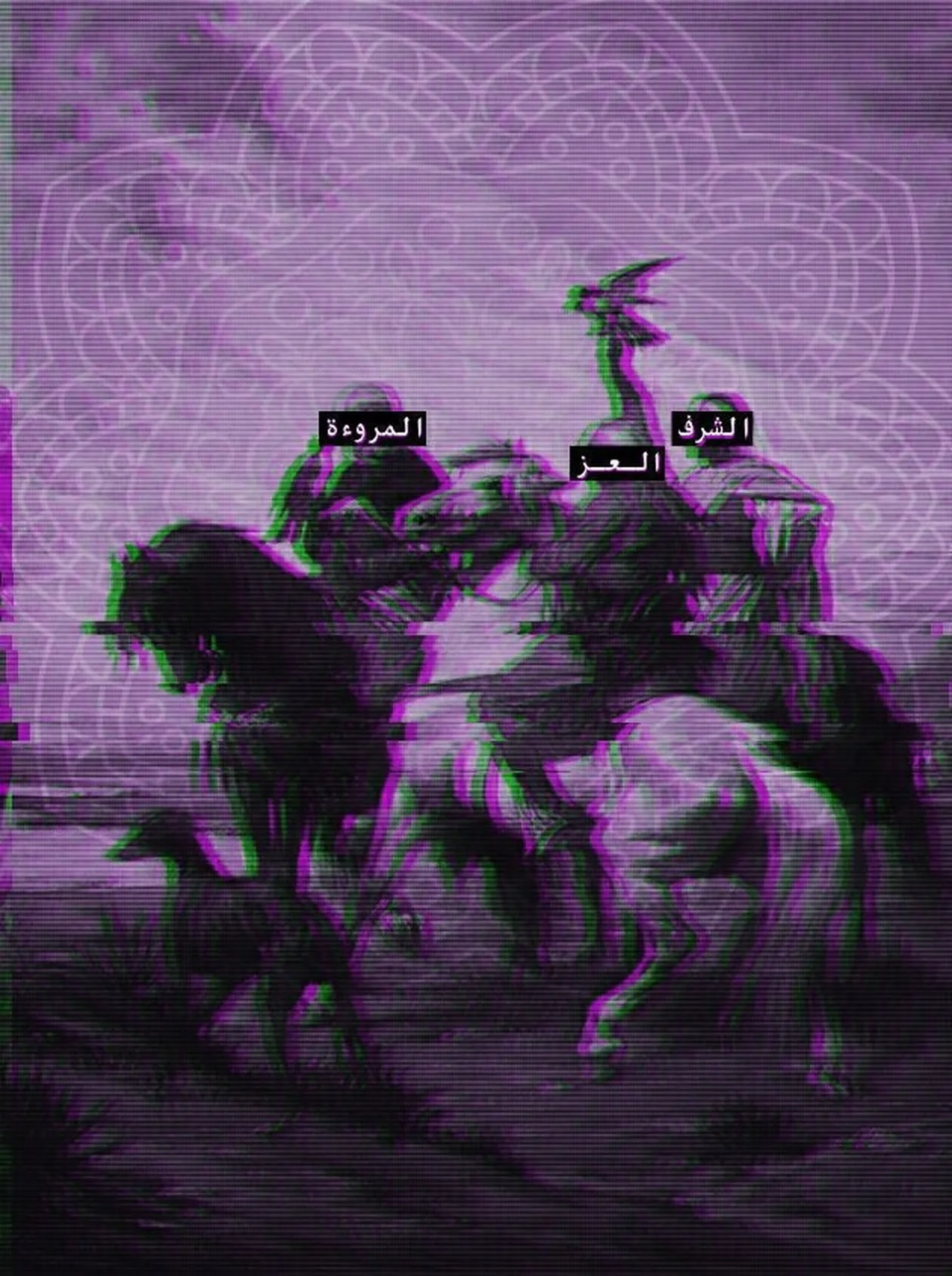
The crisis of meaning
The present era runs on geopolitical chaos, cultural nihilism, and a broad sense that nothing underwrites anything. It is the old crisis of civilizations wearing new clothes: the loss of absolute principles able to orient a human life. Empires that once carried ordo rerum have stumbled toward collapse. So where does modern humanity find heroic absolutes capable of reviving spiritual and existential order? And does it need them at all?
Islam holds deep mythic and esoteric resources for that question.
Evola’s diagnosis
Julius Evola argued that the modern world had collapsed into the economic sphere, reducing life to a quarrel between capitalists and proletarians. He wanted that dominance rejected and an integral hierarchy restored, one placing spiritual and heroic values above material concerns. His thought turned on the “absolute self,” free of every spiritual and material constraint, where freedom, power, and realization are one thing. He named the sickness of the modern world as spiritual nihilism and relativism. His answer was a heroic existentialism built on metaphysical absolutes and aristocratic virtue, in which the hero holds his ground against modern chaos and enacts timeless truths through decisive action.
The vision still has a problem from any monotheist position. Evola leans on a vaguely defined primordial Tradition, and that risks dissolving organized faith into a generalized metaphysical monism. Myth for him is never folklore; it is a cipher for metaphysical order. An Islamic reading can accept a great deal of the diagnosis and still refuse the whole package, because subsuming Islamic belief into an indiscriminate universalism dilutes Tawhid.
Heroes with a mandate
Islamic civilization keeps a long gallery of heroes whose stories show what transcendent virtue looks like once it is anchored in revelation.
Dhu al-Qarnayn, the Quranic ruler, builds an iron wall against Gog and Magog and stands for the guardianship of spiritual and social order. Antarah ibn Shaddad, the Arab poet-warrior, carries courage and martial virtue, and his heroism comes out of a struggle against injustice. Hatim al-Ta’i is remembered for a generosity and hospitality with no floor to it, a selflessness rooted in spiritual nobility. Al-Khidr is the mysterious guide whose hidden wisdom runs past conventional reason toward an esoteric mastery given by divine inspiration.
Each of them shows decisive action drawing its meaning from a transcendent principle. Together they answer the vacuum Evola diagnosed without giving up the specificity of Islamic revelation.
Shared shapes, particular ground
Heroic narratives repeat across civilizations. Heracles, Guan Yu, Sigurd, the Arthurian cycle: a divine mandate, a set of trials, a virtue made flesh, an order restored. Islam can recognize the archetype and still insist the pattern be rooted in one metaphysical foundation. For Muslims that ground is always Tawhid, the indivisible oneness and transcendence of God.
Al-Insan al-Kamil
At the center of Islamic esoteric thought is Ibn Arabi’s doctrine of the Perfect Human, al-Insan al-Kamil, who gathers every heroic virtue into a single realized life aligned with divine truth.
His inner world is the real barrier against spiritual chaos, which is guardianship of order turned inward. The spiritual stations are a martial discipline waged against the ego. Mercy and compassion move out of him without accounting, generosity taken past its usual limit. Divine insight keeps arriving from beyond the edge of what reason reaches.
This is an interior empire, a place where human action reflects divine attributes directly. Such a figure does not merely carry out heroic deeds. Heroism is the fabric of what he is.
The guardrail of transcendence
Geydar Jemal, the Russian Muslim philosopher, went after metaphysical universalism and restated Islam’s commitment to absolute divine transcendence. He saw the philosophical danger in any doctrine equating God with creation: a monism of that kind makes genuine action and meaningful discourse impossible.
He returned to the Quran’s chapter al-Ikhlas:
“He begets not, nor is He begotten, and none is comparable unto Him.”
Heroism, for Jemal, has to be oriented toward a genuinely transcendent God rather than an impersonal metaphysical essence. Creator and creation stay separate, and that separation is what keeps heroism a real response to a real command.
Empire turned outward
Empires impose order on chaos from the outside, through armies, politics, and ideology. They come apart anyway, through overstretch, ideological exhaustion, and their own contradictions.
Islamic thought traced the same cycles. Ibn Khaldun located real order in the spiritual coherence of individuals and communities. The Quran describes istibdal, the divine replacement of a civilization once it abandons its higher purpose.
Islamic esotericism draws the conclusion that the fundamental empire is internal, seated in a disciplined heart and an integrated self. That sovereignty is the only kind that survives an external collapse.
Action anchored in Tawhid
Islam can take Evola’s critique of modernity seriously, the spiritual nihilism and relativism and decay, while holding heroism inside a strict monotheistic frame that Jemal’s insistence on transcendence keeps honest. What comes out of that is a response to the spiritual crisis grounded in divine revelation rather than in an impersonal universalism, and it costs Islam none of its theological exclusivity.
The collapse of contemporary empires shows how little external political order is worth without internal coherence. Evola identified the vacuum correctly. Islam answers it with something other than a political structure: an inward empire seated in the spiritually disciplined heart. The Perfect Human, holding every heroic virtue anchored in divine transcendence, is the archetype of the heroism that actually builds civilizations, and that inward empire is what resists nihilism, relativism, and chaos.
In a post-imperial age, Islam holds that the road to a meaningful civilization runs through the recovered sovereignty of the soul, grounded in divine unity, in Tawhid.